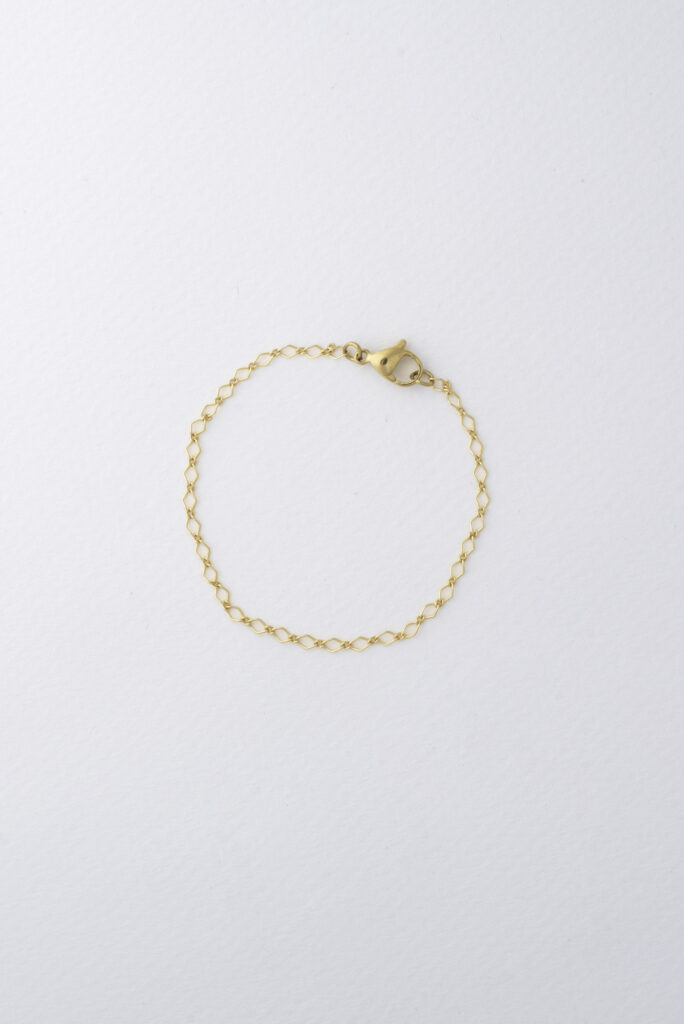
Know Your Material: Gold-Filled Jewelry
What Is Gold-filled?
Gold-filled is an affordable, durable alternative to solid karat gold. It is not an alloy. It is a layered material constructed in two or three layers. The core metal is brass; though, in the past, sterling silver was sometimes used instead. Single-clad gold-filled has all the gold content in a single layer on one side. Double-clad material splits the gold content into surface layers on both sides of the material. The gold alloy is bonded to one or both surfaces of the brass core with heat and pressure. The bonded raw material is sold as a sheet or wire to manufacturers for use in finished products.
Gold-filled products are legally required to be 5% or 1/20 gold by weight. This 5% is described by the karatage of the gold alloy on the surface. Most material is 12kt or 14kt gold-filled. It is most accurately labeled with the karatage, the “/” symbol, and then 20 to reflect this construction. Products are identified as 14/20 or 12/20 Gold-Filled; alternatively, 14kt or 12kt Gold-Filled are also acceptable as long as you use the entire phrase. Quality stamps are abbreviated to 14/20 GF or 12/20 GF.
Is gold-filled the same as gold-plated?
No, gold plating is a minuscule layer of solid gold applied to a brass base. The plating does not compose any measurable proportion of the product’s total weight. It is estimated to be 0.05% or less of the metal product. Gold plating can wear off quickly, exposing the brass base product. It does not stand up to heat, water, or wear over time. By comparison, gold-filled contains 5% gold alloy by weight. All the gold is on the surface, which offers product protection from tarnish and wear.